Complete Guide to Benazir Income Support Program Payment Verification Through Web Portal
The Benazir Income Support Programme represents Pakistan’s flagship social safety net initiative, providing crucial financial assistance to vulnerable households across the nation. This comprehensive welfare scheme has evolved significantly since its inception, becoming a lifeline for millions of Pakistani families facing economic hardships.
Under the broader Ehsaas Program umbrella, this initiative demonstrates the government’s commitment to poverty alleviation and social protection. The program has adapted to modern technological solutions, making assistance more accessible through digital platforms and streamlined verification processes.
Understanding the Digital Payment Verification System
Web Portal Access and Functionality
The official web portal serves as the primary digital gateway for beneficiaries to verify their assistance status. This user-friendly platform eliminates the need for physical visits to assistance centers, reducing travel costs and time expenditure for eligible families.
The portal’s design prioritizes accessibility, ensuring that even users with limited technical experience can navigate the system effectively. Clear instructions, simplified navigation, and multilingual support make the platform inclusive for Pakistan’s diverse population.
Related Posts:



SMS-Based Verification Services
For beneficiaries without reliable internet access, the SMS verification system provides an alternative verification method. By sending a simple text message containing their National Identity Card number to the designated shortcode, users can receive instant updates about their assistance status.
This dual-channel approach ensures no eligible family is excluded from accessing information about their financial support, regardless of their technological capabilities or geographic location.
Eligibility Criteria and Requirements
Primary Qualification Standards
Eligible households must meet specific socioeconomic criteria established through comprehensive national surveys. The Poverty Means Test (PMT) score serves as the primary determinant, with families scoring below the designated threshold qualifying for assistance.
The program prioritizes female-headed households, particularly widows, divorced women, and families with disabled members. This targeted approach recognizes the unique vulnerabilities faced by these demographic groups within Pakistani society.
Documentation Requirements
Beneficiaries must possess valid Pakistani citizenship documentation, including a computerized National Identity Card. Additional supporting documents may include children’s birth certificates, utility bills, and income verification, where applicable.
The documentation process has been streamlined to reduce bureaucratic barriers while maintaining program integrity and preventing fraudulent claims.
Current Payment Structure and Benefits
Quarterly Assistance Amount
As of 2025, eligible families receive Rs. 13,500 every three months, representing a substantial increase from previous assistance levels. This enhancement reflects the government’s recognition of rising living costs and inflation impacts on vulnerable households.
The increased payment amount enables families to address better essential needs, including food security, healthcare expenses, educational costs, and basic household necessities.
Distribution Methodology
Payments are distributed through multiple channels to ensure accessibility across Pakistan’s diverse geographic landscape. These include authorized banking partners, mobile financial services, designated payment centers, and postal services in select areas.
The phased distribution approach prevents overcrowding at payment points while ensuring systematic coverage of all eligible beneficiaries across different regions and districts.
Step-by-Step Verification Process
Online Portal Verification
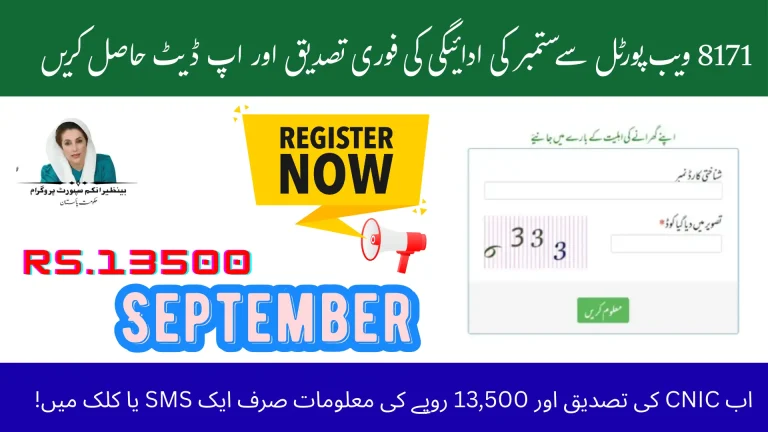
- Access the Official Portal: Navigate to the government-designated web portal using any internet-enabled device.
- Locate Verification Section: Find the status check feature prominently displayed on the homepage.
- Input Personal Information: Enter your 13-digit National Identity Card number accurately.
- Complete Security Verification: Solve the captcha code to confirm human access
- Submit Information: Click the verification button to process your request
- Review Results: Examine your assistance status and payment information displayed on screen
Mobile SMS Verification
- Prepare Your Device: Ensure your mobile phone is linked to your National Identity Card.
- Compose Message: Type your complete 13-digit National Identity Card number.
- Send to Shortcode: Transmit the message to the official number 8171
- Await Response: Receive automated confirmation of your assistance status within minutes.
- Review Information: Examine the details provided in the response message.
Geographic Distribution and Scheduling
Provincial Implementation Phases
The program operates through carefully planned phases to ensure orderly distribution and prevent system overload. Different provinces and districts receive payments according to predetermined schedules that consider local infrastructure and capacity.
This systematic approach allows for better crowd management at payment centers while ensuring all eligible beneficiaries receive their assistance within designated timeframes.
Urban and Rural Considerations
Special attention is given to reaching beneficiaries in remote areas through mobile payment units and extended service hours at rural centers. The program recognizes the unique challenges faced by families in less accessible locations.
Urban distribution centers are strategically located to serve dense populations efficiently, while rural areas receive targeted outreach through traveling service teams and local partnership networks.
Security Measures and Fraud Prevention
Biometric Verification Requirements
Enhanced security protocols include mandatory biometric verification for payment collection, ensuring that only legitimate beneficiaries can access their assistance. This technology-driven approach significantly reduces fraudulent claims and unauthorized access.
The integration of fingerprint and identity verification systems provides multiple layers of security while maintaining user convenience and accessibility for genuine beneficiaries.
Official Communication Channels
The program maintains strict communication protocols, with all official updates transmitted through verified channels. Beneficiaries are advised to disregard information from unofficial sources and rely only on government-authenticated communications.
Educational campaigns inform beneficiaries about official contact methods and warn against common fraud attempts, protecting vulnerable families from exploitation.
Troubleshooting Common Issues
Status Verification Problems
If verification attempts return error messages or unexpected results, beneficiaries should first verify their National Identity Card number entry for accuracy. Common input errors include incorrect digits or formatting issues.
Persistent problems may indicate the need for database updates or documentation renewal, requiring a visit to the nearest assistance office for resolution.
Payment Collection Difficulties
When authorized payment collection fails, beneficiaries should confirm their biometric data is current with national registration authorities. Outdated fingerprint records can prevent successful verification at collection points.
Alternative collection methods may be available through partner financial institutions or mobile payment services, providing flexibility for beneficiaries facing initial collection challenges.
Registration Process for New Applicants
Initial Application Steps
Prospective beneficiaries must first complete the National Socio-Economic Registry survey through authorized government representatives or designated centers. This comprehensive assessment determines eligibility based on household circumstances and economic status.
The registration process includes verification of personal documents, family composition assessment, and income evaluation to ensure assistance reaches genuinely deserving families.
Survey Completion and Verification
The dynamic survey process captures current household information, including changes in family size, income sources, and living conditions. Regular updates ensure the program maintains accurate beneficiary records and appropriate assistance levels.
Survey completion typically takes 10-15 working days for processing, after which eligible applicants receive confirmation through official communication channels.
Partnership Networks and Collection Points
Banking Institution Collaborations
The program partners with major Pakistani banks to provide secure payment collection services through ATM networks and branch locations. These partnerships extend the program’s reach while leveraging existing financial infrastructure.
Specialized payment cards issued through banking partners enable convenient access to assistance funds while maintaining security and accountability standards.
Mobile Financial Services Integration
Integration with popular mobile financial platforms provides additional convenience for tech-savvy beneficiaries, particularly in urban areas where mobile banking adoption is high.
These services offer features like balance inquiries, transaction history, and instant notifications, enhancing the overall user experience for digital payment collection.
Program Impact and Social Benefits
Poverty Reduction Outcomes
The assistance program has demonstrated measurable impacts on reducing extreme poverty levels across participating households. Regular financial support enables families to invest in education, healthcare, and income-generating activities.
Long-term studies indicate improved nutritional outcomes for children in beneficiary families, alongside increased school enrollment rates and reduced child labor participation.
Women’s Economic Empowerment
By prioritizing female beneficiaries, the program contributes to women’s economic empowerment and decision-making authority within households. This approach recognizes women’s crucial role in family welfare and resource management.
Enhanced financial security for women leads to improved investment in children’s education and health, creating positive intergenerational impacts beyond immediate assistance benefits.
Future Enhancements and Digital Innovation
Technology Integration Plans
Ongoing development includes enhanced mobile applications, improved web portal functionality, and integration with emerging financial technologies. These improvements aim to make assistance access even more convenient and secure.
Artificial intelligence and machine learning applications are being explored to improve fraud detection and streamline the beneficiary verification process.
Expansion Opportunities
Program expansion considerations include increased payment amounts, additional support services, and extended coverage to previously underserved populations. These enhancements depend on fiscal capacity and implementation infrastructure development.
Integration with complementary social protection programs offers potential for comprehensive support packages addressing multiple aspects of poverty and vulnerability.
Conclusion
The web portal verification system has revolutionized access to Pakistan’s financial assistance program, making it easier than ever for eligible families to check their status and collect their Rs. 13,500 quarterly payments. With both online and SMS verification options available, beneficiaries can stay updated on their assistance status from anywhere in the country.
To maximize your benefits, regularly check your payment status through official channels, keep your documentation current, and follow security guidelines when collecting payments. This vital program continues supporting millions of Pakistani families in meeting their essential needs and building better futures.
Frequently Asked Questions
How do I check my assistance status online?
Visit the official web portal, enter your National Identity Card number, complete the security verification, and click submit to view your current status and payment information.
What should I do if my payment status shows as processing?
Wait 2-3 days and check again, as payments are processed in batches. If the status remains unchanged after a week, contact the official helpline or visit your nearest assistance office.
Can I use SMS verification if I don’t have internet access?
Yes, send your 13-digit National Identity Card number to 8171 from any mobile phone linked to your identity card to receive instant status updates via text message.
What documents do I need to collect my payment?
Bring your original National Identity Card and be prepared for biometric verification. Some collection points may also require your assistance card if previously issued.
How often are payments distributed?
Assistance is distributed quarterly (every three months) to eligible beneficiaries, with specific dates varying by region and distribution phase scheduling.
What is the current assistance amount per payment cycle?
Eligible families receive Rs. 13,500 per quarter, which represents an increase from previous payment amounts to help address rising living costs.
Other Related Programs
- How to Check Benazir Income Support Scheme Balance Status – Complete Guide
- BISP 8171 August 2025 Payment Update Complete Guide for Pakistani Families
- BISP 8171 August 2025 Payment Eligibility – Who Can Get Rs. 13,500 This Time?
- 8171 Web Portal 2025 – Instantly Check BISP Eligibility and Track Rs. 13,500 Payments Online
- BISP 8171 Phase 3 August 2025 – Last Chance to Get Your Rs. 13,500 Relief Payment